
Yes — you can use water pressure to clean solar panels, but you usually should not “pressure wash” them the way you would paving or walls. The safest, most repeatable approach is controlled rinsing + gentle brush contact + the right water quality, while avoiding direct spraying at sensitive interfaces (junction boxes, edge seals, connectors) and staying within your specific panel manufacturer’s cleaning limits. Source
If you want equipment designed around that safer method (rather than brute force pressure), see our solar panel cleaning equipment.
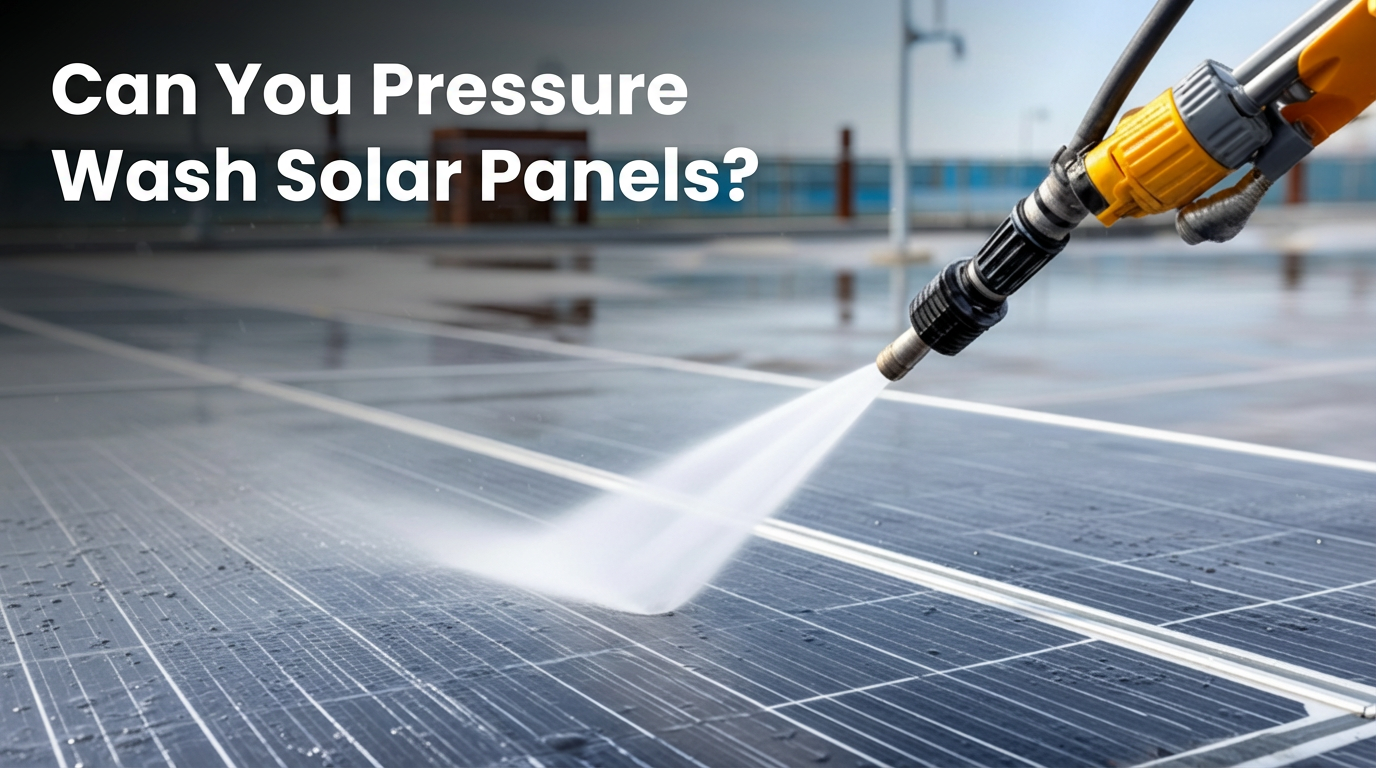
What “pressure washing” means (and why people argue about it)
Most confusion comes from the phrase pressure wash being used for two very different methods:
- High-pressure blasting
Tight jet, close distance, high force. This is the risky version. - Controlled pressure rinsing
Wide spray, appropriate distance, within manufacturer limits, used mainly to rinse and carry away loosened dirt. This can be acceptable if done correctly and within the module maker’s rules.
A practical way to think about it:
Solar panels don’t get cleaner because water is “more aggressive.” They get cleaner because dirt is safely loosened and carried away without damaging the surface or pushing water into sensitive areas.
The real risks of pressure washing solar panels (in plain language)
1) Water forced into places it shouldn’t go
Even if the front glass looks tough, the panel includes sealed interfaces and electrical components. Manufacturer guidance can explicitly warn against spraying pressurized water at sealed interfaces (junction box, edge seal, connectors). Source
2) Using the wrong pressure (because “safe PSI” isn’t universal)
Different module brands specify different limits. Here are examples showing how much it can vary:
- Trina Solar: front-glass wash pressure must not exceed 700 kPa (~101 psi). Source
- JA Solar (ARC glass): water pressure should be less than 690 kPa (100 psi), and cleaning tools should be soft to protect coated glass. Source
- First Solar: water pressure must not exceed 35 bar (500 psi) at the nozzle, with clear warnings about sealed interfaces. Source
Takeaway: The “right pressure” depends on the panel, the setup, and the method. The wrong setup can create avoidable risk.
3) Turning cleaning into abrasion (scratching by accident)
A lot of panel damage comes from technique, not just water:
- scrubbing dry dust,
- dragging grit across the surface,
- using the wrong brush material.
JA Solar’s ARC glass method emphasizes soft materials and avoiding abrasive tools. Source
4) Thermal shock (cold water on hot panels)
Cleaning should avoid extreme temperature differences between the water and the module surface to reduce stress risk. First Solar includes temperature-related guidance in its cleaning document. Source
Homeowners: the safest “no drama” method
If you’re cleaning your own home system, the goals are simple: safe, effective, minimal risk.
Recommended homeowner workflow
- Clean when panels are cool (morning/late afternoon).
- Rinse first to remove loose dust (this prevents rubbing grit).
- Use a soft brush to loosen stuck dirt (bird droppings, pollen film, pollution).
- Rinse thoroughly to carry dirt away.
- Let it dry naturally (better results with purified water).
What to avoid at home
- Tight jet pointed at edges / backs / junction boxes
- Trying to “blast off” grime instead of loosening and rinsing
- Harsh chemicals (many manufacturers restrict chemicals; the safer default is minimal, mild solutions only when needed and compatible with the module maker) Source
Cleaning businesses: a repeatable, professional method (fast + safe + consistent)
If you clean panels for money, your real product is repeatable results without callbacks and without damage risk.
Why pros don’t want “blast cleaning”
Because it creates two business risks:
- damage liability (or long-term issues you get blamed for later),
- inconsistent finishing (especially mineral spotting from ordinary tap water).
A professional workflow that scales
- Pre-rinse
- Agitate gently (soft brush / rotating brush designed for PV)
- Rinse
- Finish with purified water (RO/DI) if your clients expect spot-free results
Your equipment catalog is already structured around these “control-first” methods and includes rotating brush machines, pole systems, and water filtration options. Source
Choosing equipment (what matters more than “more pressure”)
1) Control
You want predictable output and the ability to stay gentle.
2) Safe contact (brush design matters)
Soft bristles and purpose-built brush heads reduce scratching risk.
3) Reach + safety
Long reach reduces ladder time and improves consistency.
4) Water quality
Spotting and residue are often water-quality problems, not cleaning-effort problems. Your page highlights why purified water matters for professional finishing. Source
Optional: add a short video to your WordPress post (visual proof)
If you want the article to feel more “real” and visual on WordPress, embed one of your existing videos (already used on your equipment page):
- Pole kit overview video: https://youtu.be/y0EsLKlc8SQ Source
- RO system video: https://youtu.be/5t3Bj_y4XLU Source
- Mobile pump video: https://youtu.be/AX2QTPGXzBk Source
Bottom line
Can you pressure wash solar panels?
Yes—if it means controlled rinsing within the panel manufacturer’s rules. But if by “pressure wash” you mean high-pressure blasting with a tight jet, that’s the approach most likely to cause avoidable problems.
For homeowners and cleaning businesses, the safest default is:
controlled rinse + soft brush agitation + good water quality + avoid sealed interfaces.