

RO vs DI: Which Pure-Water Setup Should You Buy?
Both systems make mineral-free water for spot-free exterior glass. Use the decision flow below and the setup/troubleshooting sections to choose with confidence.
Pure water in one minute
- Minerals in tap water leave white spots as they dry.
- A handheld TDS meter tells you dissolved solids (ppm). Aim for output < ~10 ppm for spot-free results with good technique.
- DI tanks remove minerals immediately using resin. RO membranes remove most minerals cheaply, then a small DI “polish” gets you to near-zero.

5-minute decision flow
- How often will you clean with pure water? If infrequent: start DI-only. If weekly/daily: consider RO/DI.
- What’s your feed TDS? Test a glass of tap water. Higher TDS burns DI resin faster → RO/DI saves money.
- Where will you work? If you need pure water on-site from any tap → RO/DI trolley or tank + pump. If you can batch-fill at base → RO plant at base + 15 L pump on site.
- Budget today vs running cost tomorrow? DI is cheapest to start; RO/DI is cheapest to run.
- Reach needed? 6 m pole for double-storey; 9 m for third-storey/awkward angles.
Option A: DI-only (fastest to start)


Best for: New starters, mobile jobs, occasional pure-water use.
- Kit: DI tank + resin → hose → 15 L pump/backpack → waterfed pole.
- Pros: Lowest upfront cost, tiny footprint, no plumbing complexity.
- Watch-outs: Resin is a consumable—track TDS and keep a spare bag.
Option B: RO/DI (lowest running cost)
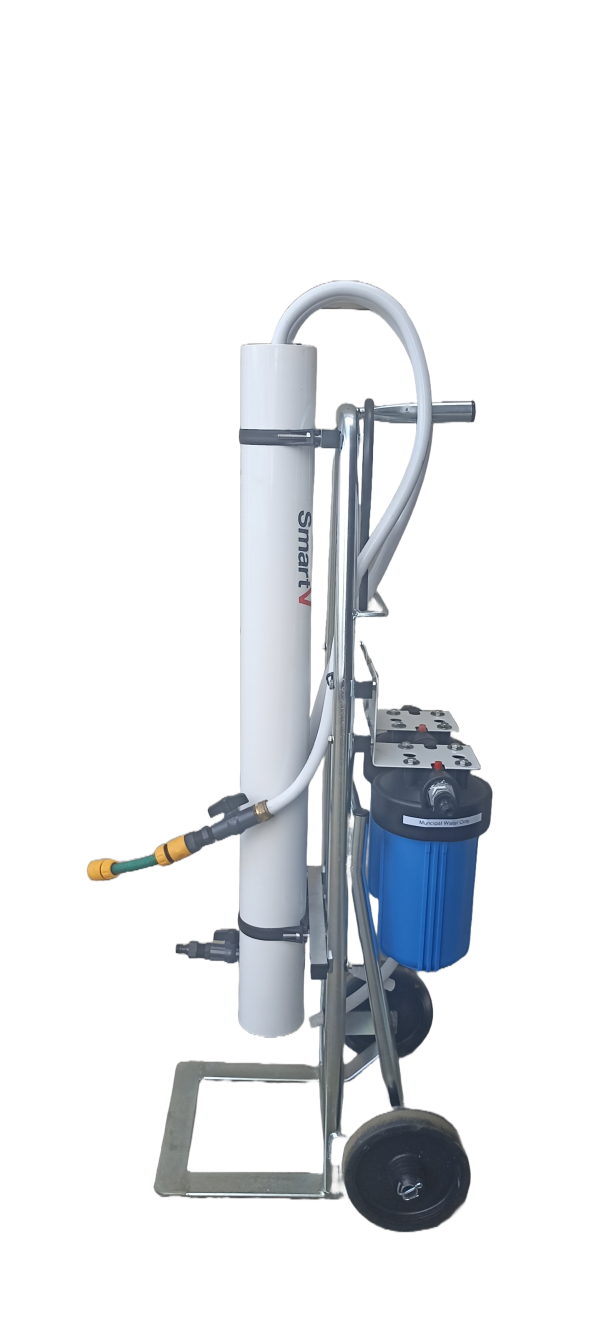

Best for: Frequent cleaning, higher TDS areas, or teams who want consistent costs.
- Kit: RO plant/trolley → holding tank/containers → 15 L pump → pole.
- Pros: Minimal resin spend; reliable water quality all day.
- Watch-outs: A simple maintenance routine (pre-filters first) keeps flow strong.
Brush, jets & flow: dial in performance
- Brush type: Soft flagged for maintenance cleans; firmer bristle for first-cleans (more agitation).
- Jets: Pencil jets for bite on grime; fan jets for fast sheet rinsing on hydrophobic glass.
- Flow guide: Start around ~1.0 L/min. Go higher for hydrophobic glass, lower for small panes to control runoff.
- Technique: Top frame first, scrub in overlapping S-patterns, then controlled close-rinse from top down.
Quick setup & safety
- Check TDS at the outlet; under ~10 ppm is good to go.
- Flush frames first to avoid “weeping” onto clean glass.
- Manage hoses and signage in public areas; battery leads away from water.
- During load-shedding, run the 15 L pump; carry a second charged battery for long days.
DIY costing worksheet (copy these lines into Notes)
- Jobs/month: ______ Average litres/job (pure): ______
- Feed TDS (ppm): ______ Resin price per litre: R______
- DI-only monthly resin spend (empirical): R______ (track for 2–3 weeks)
- RO/DI monthly spend (pre-filters + resin polish): R______
- Break-even months for RO/DI vs DI-only: ______
See our full window cleaning equipment
This page intentionally links only to the main equipment page.